
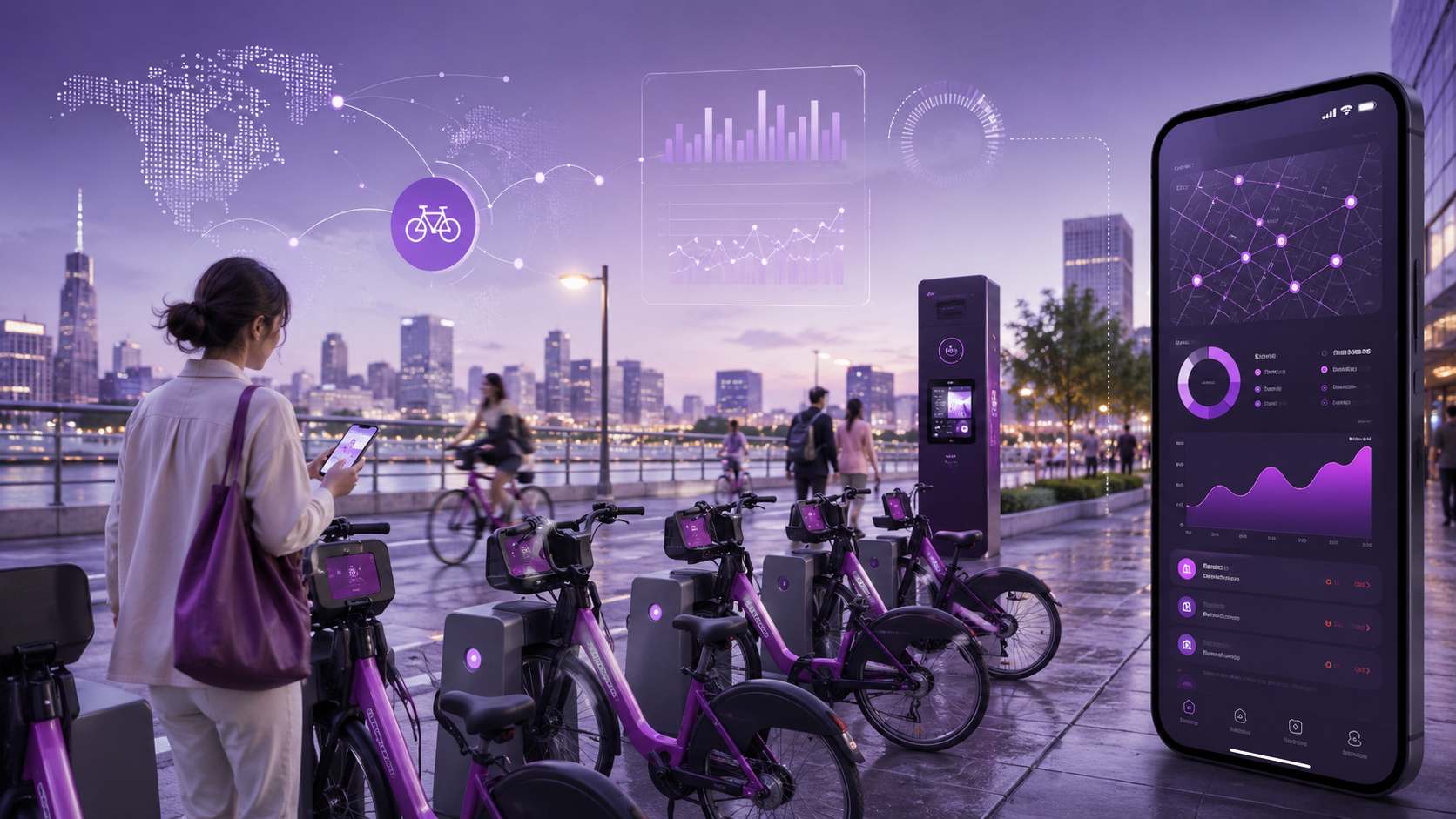
Public mobility platforms operate in an unforgiving environment. The service must remain available to users, physical assets must stay connected to digital systems, operational teams need reliable information, and public expectations continue to rise. A disruption is not only a technical incident. It becomes a visible service failure.
The pressure behind the request
We supported a city-based bicycle platform that had to keep operating while its technical and organizational foundations were evolving. The challenge was not simply to improve software. The wider system included customer journeys, hardware dependencies, operational processes, support teams, external suppliers and a public-facing service that could not be paused while improvements were introduced.
The organization needed clearer architecture, stronger product ownership and a delivery model that could respond to real-world issues without turning every change into a separate project.
Why a narrow software approach would not work
A mobility platform sits at the intersection of technology and physical operations. A technically elegant solution can still fail when it ignores how bicycles are maintained, how stations are replenished, how customer support responds, or how operational data is interpreted.
Our team therefore treated the platform as an operating system rather than an isolated application. We connected the digital product roadmap to the service experience, operational dependencies and the capacity of the people responsible for keeping the system running.
How we worked
We helped create structure around priorities, architecture and delivery. That included clarifying ownership, translating operational pressure into product decisions, identifying dependencies and helping teams distinguish urgent incidents from changes that required deeper architectural correction.
We worked collaboratively with the existing organization and partners. The purpose was not to replace the people who understood the service, but to create enough architectural and delivery clarity for their knowledge to become actionable.
The transferable lesson
Public platforms cannot be scaled through feature delivery alone. They require a continuous connection between customer experience, operational reality, product architecture and team capacity.
When those elements move together, the platform becomes easier to operate, improve and expand. When they are separated, technical debt and service pressure reinforce each other.
Growth becomes sustainable when the digital product and the physical operation are treated as one delivery system.